Meal prep means preparing some or all of your meals or ingredients ahead of time. Done well, it saves time, reduces food waste, cuts costs and makes healthy choices the easy choice on busy days. You do not need to spend your whole Sunday cooking: even an hour or two makes a difference.
Benefits of Meal Prep
- Fewer last-minute takeaway orders
- Better portion and nutrition control
- Lower grocery bills and less waste
- Less daily decision fatigue
- Supports specific goals such as weight loss, muscle gain or managing blood sugar
Choose Your Meal Prep Style
| Style | How it works | Best for |
|---|---|---|
| Full meals | Cook and portion complete meals into containers | Office lunches, strict routines |
| Batch cooking | Make large pots of curry, dal or soup and freeze portions | Families, freezer-friendly dishes |
| Ingredient prep | Wash, chop and cook components to mix and match | People who like variety |
| Grab-and-go packs | Pre-portion snacks, smoothie packs, overnight oats | Busy mornings |
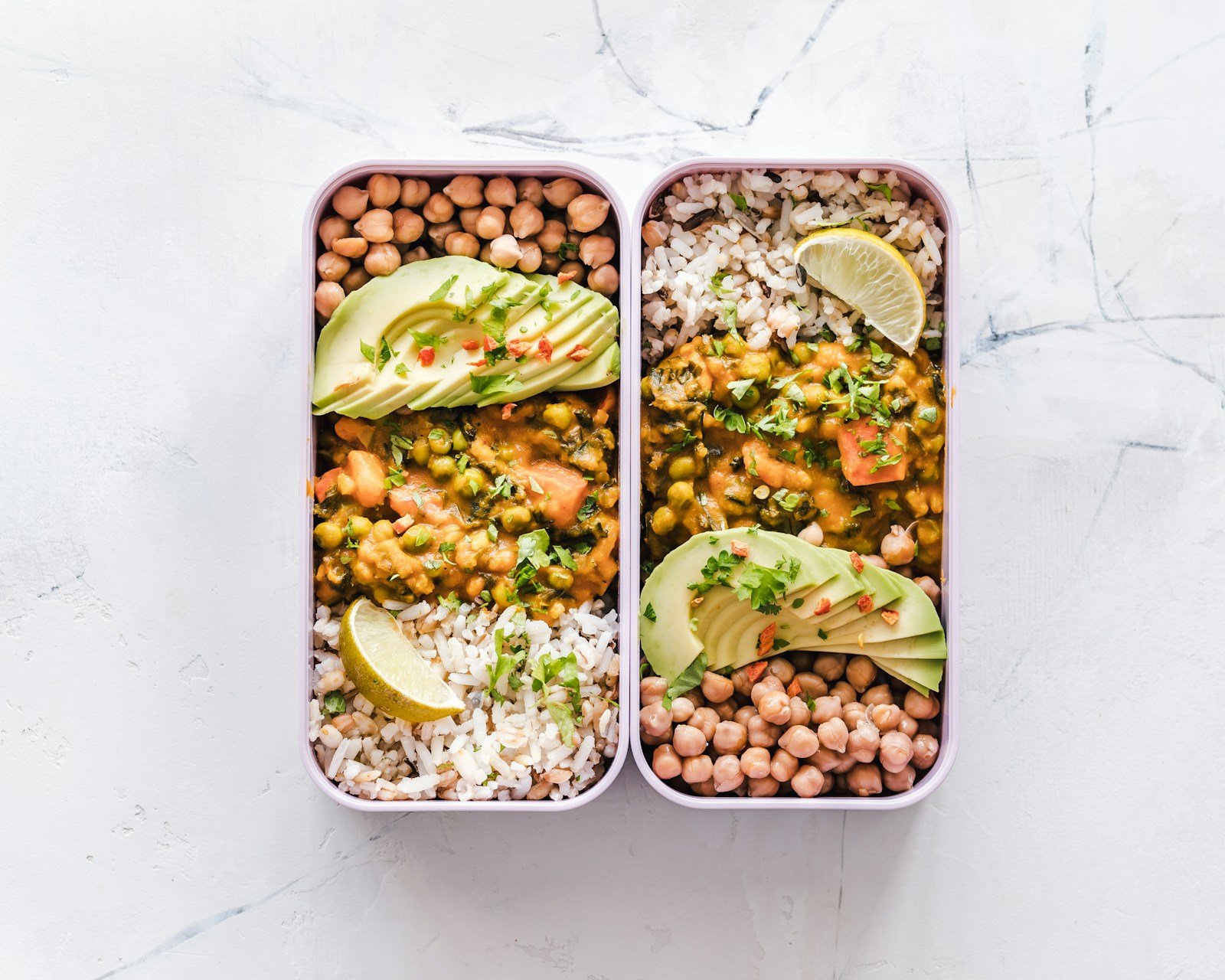
Step-by-Step Meal Prep
Step 1: Plan simply
Start with 3 to 4 days, not a whole week. Pick two proteins, two or three vegetables, one or two grains and a couple of sauces or dressings. Use the balanced plate as a template.
Step 2: Make a shopping list
Check your fridge and pantry first. Group items by store section and buy staples in bulk where it makes sense, such as rice, oats, lentils and frozen vegetables.
Step 3: Get containers
Use a mix of glass or BPA-free plastic containers with tight lids, plus small jars for dressings. Compartment boxes help prevent sogginess.
Step 4: Cook in an efficient order
- Start grains and legumes cooking (rice cooker, pressure cooker or pot).
- Roast vegetables and protein in the oven on trays.
- Prepare sauces, chutneys and dressings while things cook.
- Wash and chop raw vegetables and fruit.
- Boil eggs for snacks and breakfasts.
Step 5: Cool, portion and store safely
Cool food quickly and refrigerate within two hours. Cooked meals are generally best eaten within 3 to 4 days when refrigerated at or below 4 degrees Celsius (40 degrees Fahrenheit). Freeze portions you will not eat within that window and reheat until piping hot (74 degrees Celsius or 165 degrees Fahrenheit).
Sample Beginner Prep Menu
- Breakfast: Overnight oats with chia, fruit and nuts in jars, or vegetable egg muffins
- Lunch: Brown rice, rajma or chicken curry, roasted vegetables and salad
- Snack: Hummus with cut vegetables, roasted chana, fruit
- Dinner: Dal, millet roti or quinoa and a stir-fried vegetable, or soup with sandwiches
Foods That Prep Well and Those That Do Not
- Prep well: Dal, curries, soups, roasted vegetables, grains, boiled eggs, beans, marinated proteins, chopped carrots and peppers.
- Prep less well: Dressed salads (keep dressing separate), fried crispy foods, delicate herbs, avocado and sliced bananas, which brown quickly.
Tips to Avoid Boredom
- Prep components rather than identical meals and change sauces and spices.
- Rotate recipes every week or two.
- Keep a few fresh toppings like herbs, lemon, yogurt and seeds to refresh meals.
The Bottom Line
Start small, keep recipes simple and store food safely. Even prepping just breakfasts or lunches can transform how you eat during a busy week.
This article is for general education and is not a substitute for personalised advice from a registered dietitian or doctor.