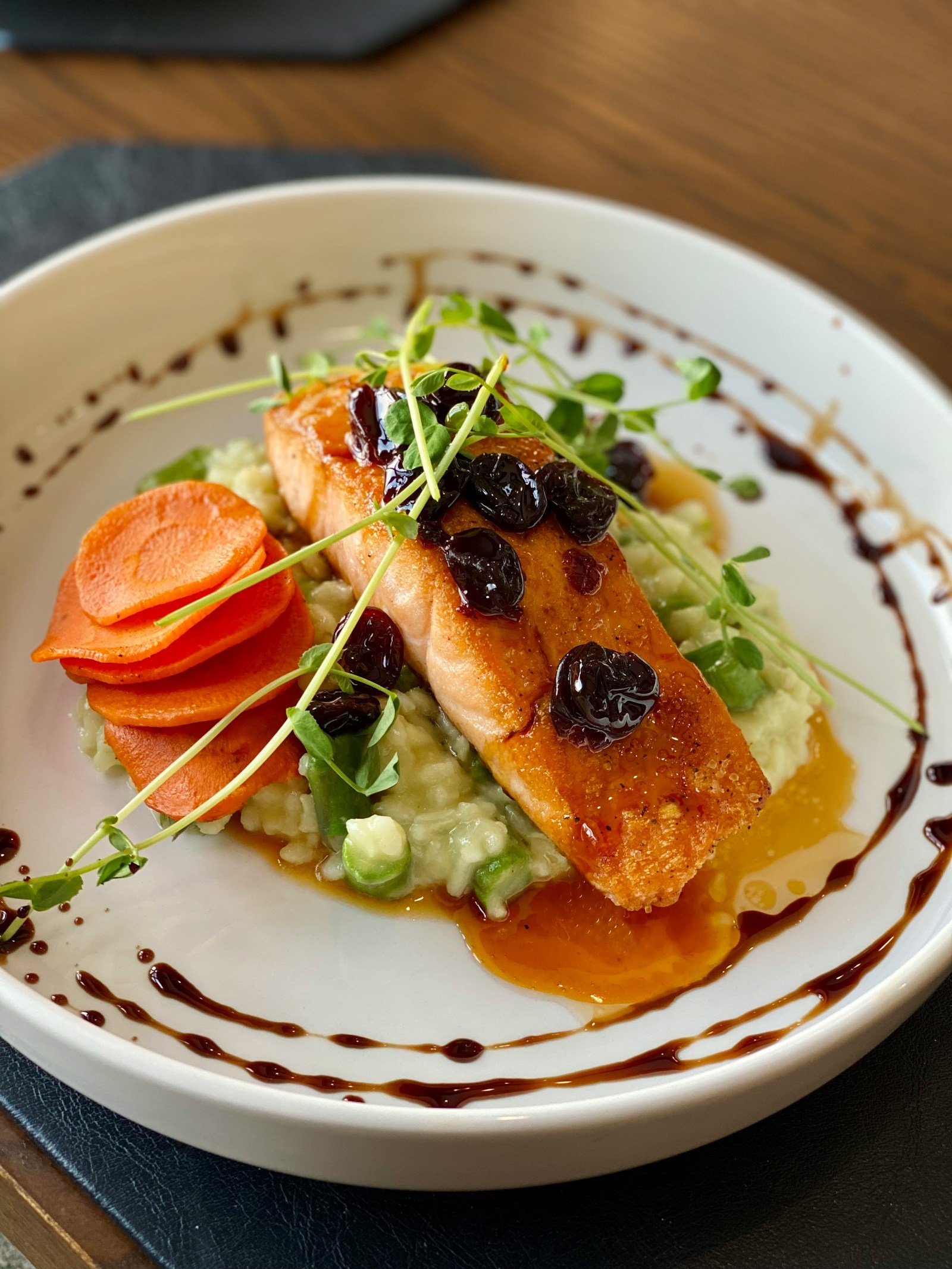
Salmon is often called a nutritional powerhouse, and for good reason. It is rich in high-quality protein, vitamin D, B vitamins and especially the long-chain omega-3 fatty acids EPA and DHA that most people do not get enough of.
What Are Omega-3 Fatty Acids?
Omega-3s are essential polyunsaturated fats that your body cannot make on its own. There are three main types:
- EPA and DHA: Found in fish, seafood and algae. These are the forms most directly linked to heart, brain and eye health.
- ALA: Found in flaxseed, chia, walnuts and canola oil. The body converts only a small fraction (often under 10 percent) to EPA and DHA.
Salmon Nutrition Facts
A 100 g serving of cooked Atlantic salmon provides about:
| Nutrient | Amount (approx.) |
|---|---|
| Calories | 200 (farmed) or 180 (wild) |
| Protein | 22 g |
| EPA + DHA | 1.5 to 2.3 g |
| Vitamin D | 10 to 15 mcg (400 to 600 IU) |
| Vitamin B12 | 3 to 4 mcg |
| Selenium | Over 40 mcg |
Health Benefits
- Heart health: Omega-3s lower triglycerides, reduce blood pressure slightly and are linked to fewer cardiac events in people who eat fish regularly.
- Brain and mood: DHA is a key structural component of the brain. Higher fish intake is associated with lower cognitive decline risk.
- Inflammation: EPA and DHA help produce molecules that resolve inflammation.
- Pregnancy and infant development: DHA supports foetal brain and eye development.
- Eye health: DHA is concentrated in the retina.
How Much Fish Should You Eat?
The American Heart Association and many other bodies recommend at least two servings (about 100 g each, cooked) of fish per week, preferably fatty fish. Adults need around 250 to 500 mg of combined EPA and DHA daily for general health.
Other Good Omega-3 Fish Sources
- Sardines and mackerel (Indian mackerel or bangda)
- Herring and anchovies
- Trout and rainbow trout
- Hilsa (ilish) and pomfret in moderation
- Canned light tuna and canned salmon
Plant-Based and Supplement Options
Vegetarians can eat flaxseed, chia and walnuts for ALA and consider algae oil supplements that provide DHA and EPA directly. Fish oil capsules are an option for those who do not eat fish, but evidence for supplements preventing heart disease in the general population is weaker than for eating fish itself. Speak with your doctor, especially if you take blood thinners.
Mercury and Safety
Salmon, sardines and trout are low in mercury. Pregnant and breastfeeding women and young children should avoid high-mercury fish such as shark, swordfish, king mackerel and tilefish, and limit albacore tuna.
Wild vs Farmed Salmon
Both are nutritious. Farmed salmon often has more total fat and omega-3, while wild salmon is leaner and contains fewer contaminants in some regions. Choose whichever fits your budget and values, and look for sustainable certifications.
Healthy Cooking Tips
- Bake, grill, steam or pan-sear with a little olive oil.
- Season with lemon, herbs, garlic and ginger.
- Avoid deep frying, which adds calories and can degrade omega-3s.
The Bottom Line
Eating fatty fish like salmon twice a week is a simple way to protect your heart and brain. If you do not eat fish, plan plant sources and consider algae-based supplements.
This article is for general education and is not a substitute for personalised advice from a registered dietitian or doctor.